Meet the bee family
A beehive is like a giant family — sometimes with tens of thousands of bees living together. They all have special jobs. Say howdy to the crew!
The Queen Bee
She's the boss — and the mom!
There's usually just one queen in the whole hive. Her big job is laying eggs — up to 2,000 a day in spring! She can live for several years and keeps the whole family together.
Worker Bees
Worker bees are all female, and they do almost all the work — cleaning, nursing the babies, building wax, guarding the door, and flying out to gather nectar and pollen. Busy, busy, busy!
Drone Bees
The dudes of the hive
Drones are the boy bees. They don't gather food or sting — their main job is to help make new baby bees. They're bigger and rounder than workers, with big eyes.
How a bee is born
Every bee starts out as a tiny egg no bigger than a grain of rice. In just about three weeks, that egg becomes a grown-up bee. Here's how it happens!
Egg
Day 0
The queen lays a tiny egg the size of a grain of rice, standing straight up in the cell.
Larva
Day 3
Out hatches a wiggly little white larva. Nurse bees feed it — royal jelly first, then pollen and honey.
Pupa
Day 9
The cell gets capped with wax. Inside, the larva changes shape — growing legs, wings, and eyes.
Bee!
Day 21
A brand-new worker bee chews her way out and gets right to work. Welcome to the family!
Bees help our food grow 🍎
When a bee lands on a flower to drink nectar, she gets covered in a yellow dust called pollen. Then she carries it to the next flower — and that's how flowers turn into fruit and seeds!
That's called pollination. Without bees, we wouldn't have apples, watermelon, blueberries, cucumbers, or most of the yummy fruits and veggies in the garden. A bee isn't just a bug — she's a tiny flying farmer!
No bees, no berries. 🫐

Wildflowers like these aren't just pretty — they're a bee's grocery store. The more flowers we plant, the happier the hive.
Mind-blowing bee facts
Ready to be amazed? Here are a few of our favorites to share with your friends.
It takes about 12 worker bees their whole lives to make a single tablespoon of honey. Every drop is a lot of work!
A flying honey bee beats her wings about 200 times every second. That buzz you hear? That's her wings!
A forager bee can fly up to 5 miles from the hive to find the best flowers — then find her way home.
A great queen can lay up to 2,000 eggs in a single day during spring. She's the busiest mom in Texas!
How kids can help the bees 🌻
Bees could use a hand — and kids can be bee heroes! Here are four easy things you can do to help the bees in your yard and your neighborhood.
Plant flowers
Bees love colorful, smelly flowers — especially native Texas wildflowers like bluebonnets. Ask a grown-up to plant some!
Leave a drink
Bees get thirsty! A shallow dish with pebbles and a little water gives them a safe place to sip.
Don't swat
If a bee buzzes by, stay calm and still. She's just working. Swatting scares her — and bees only sting to protect their home.
Skip the spray
Bug sprays hurt good bugs too. Ask your family to go easy on chemicals so bees stay healthy.
Come visit a real hive!
Reading about bees is fun — but meeting them is even better! Kelly and Paul keep bees right here in New Braunfels, and they love showing kids and families how it all works. Suit up, open a hive, and see the bees for yourself.
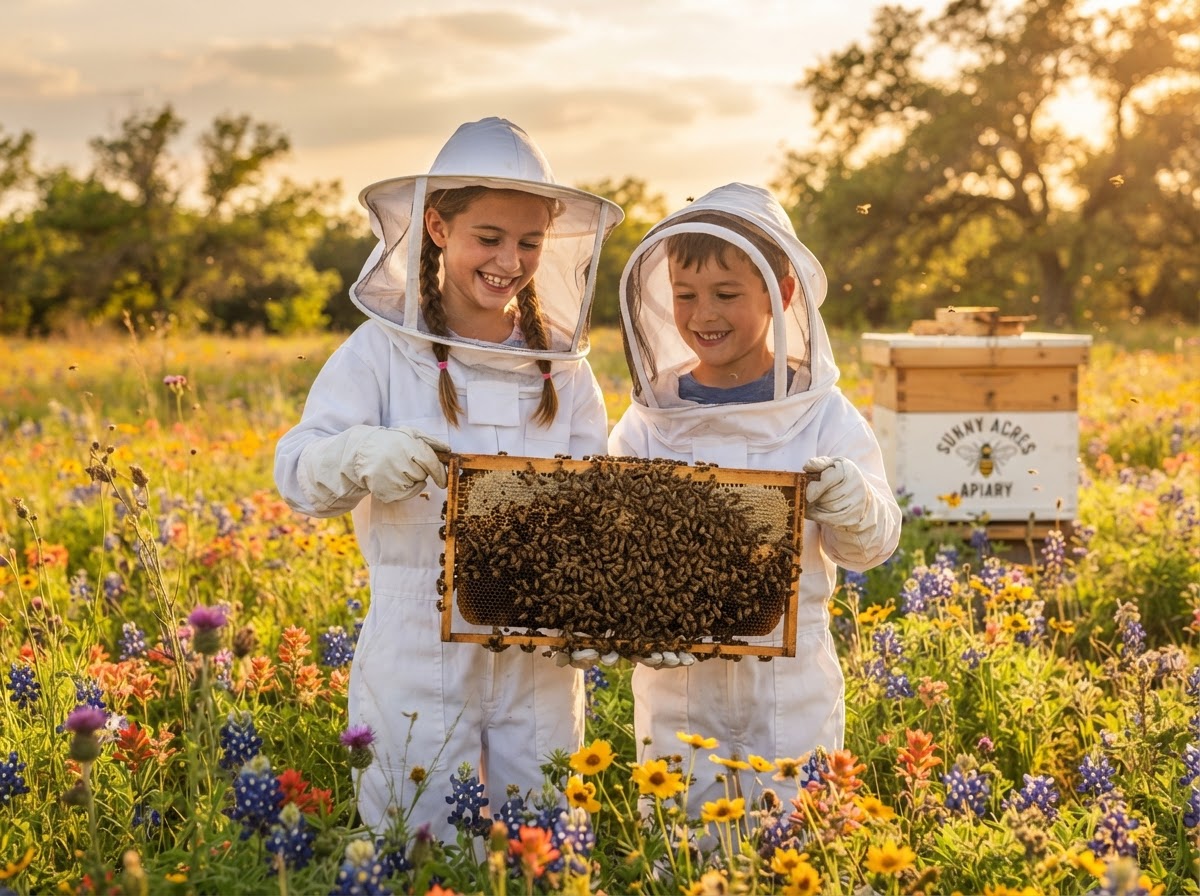
Our family hive days are gentle, safe, and made for curious minds of every age. Bring your grown-up!
Share Bee Camp with a friend!
Know a kid who'd love this? Send them our way — and bring the whole family out to see the bees in person.