Honey isn't a treat for us. It's bee food.
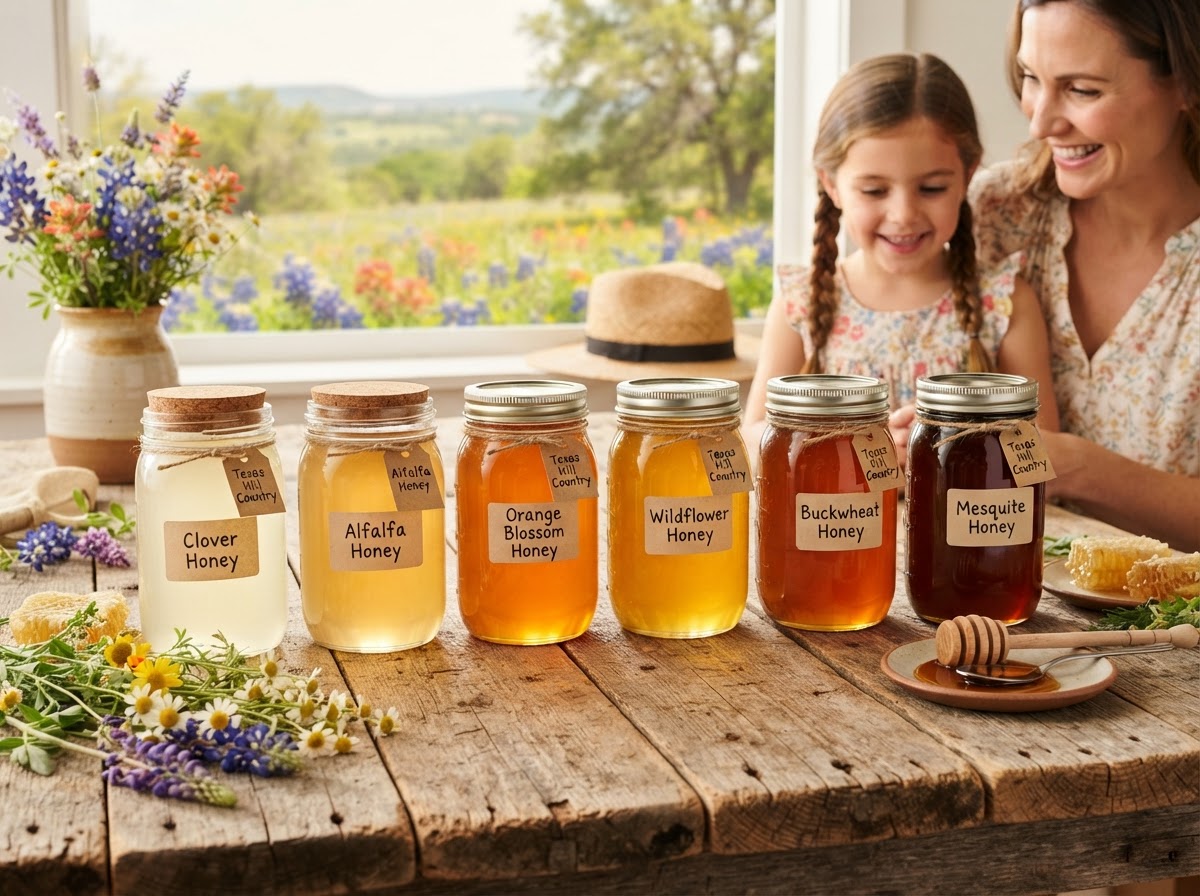
Same bees, same hive, same process — only the flowers changed. That's why no two jars of real honey ever look or taste exactly alike.
How bees turn a flower into honey
It's not magic, but it's pretty close. Here's the five-step journey a drop of nectar takes from a wildflower to a capped cell of honey — all done by bees, no machines required.
Sip the nectar
A forager bee lands on a flower and drinks up sweet liquid called nectar — the sugary juice flowers make to attract pollinators. She stores it in a special second stomach called her honey stomach.
Add the magic
On the flight home, the bee adds special enzymes from her body to the nectar. These enzymes start breaking the sugars down — that's the very first step of turning nectar into honey.
Pass it along
Back at the hive, she passes the nectar mouth-to-mouth to a younger house bee. Each bee adds a little more enzyme and a little more magic, getting it ready for storage.
Dry it down
The house bee spreads the nectar into the wax cells and fans her wings to dry it out. Nectar is mostly water; honey is only about 17% water. Fanning evaporates the extra moisture away.
Cap the jar
Once the honey is thick and just right, the bees seal the cell with a cap of fresh white wax. That capped honey is the colony's pantry — their food for the cold months when no flowers bloom.
The flowers decide the color
Here's the part that surprises people: honey isn't one color. The nectar and pollen a bee gathers carry the flavor and pigment of the flower they came from. Change the bloom, change the honey.
That's why a jar of pale clover honey and a jar of dark mesquite honey can come from the same hive, just a few weeks apart. The bees followed the bloom — and the bloom painted the honey.
Same bees. Same hive. Different flowers. Different honey.
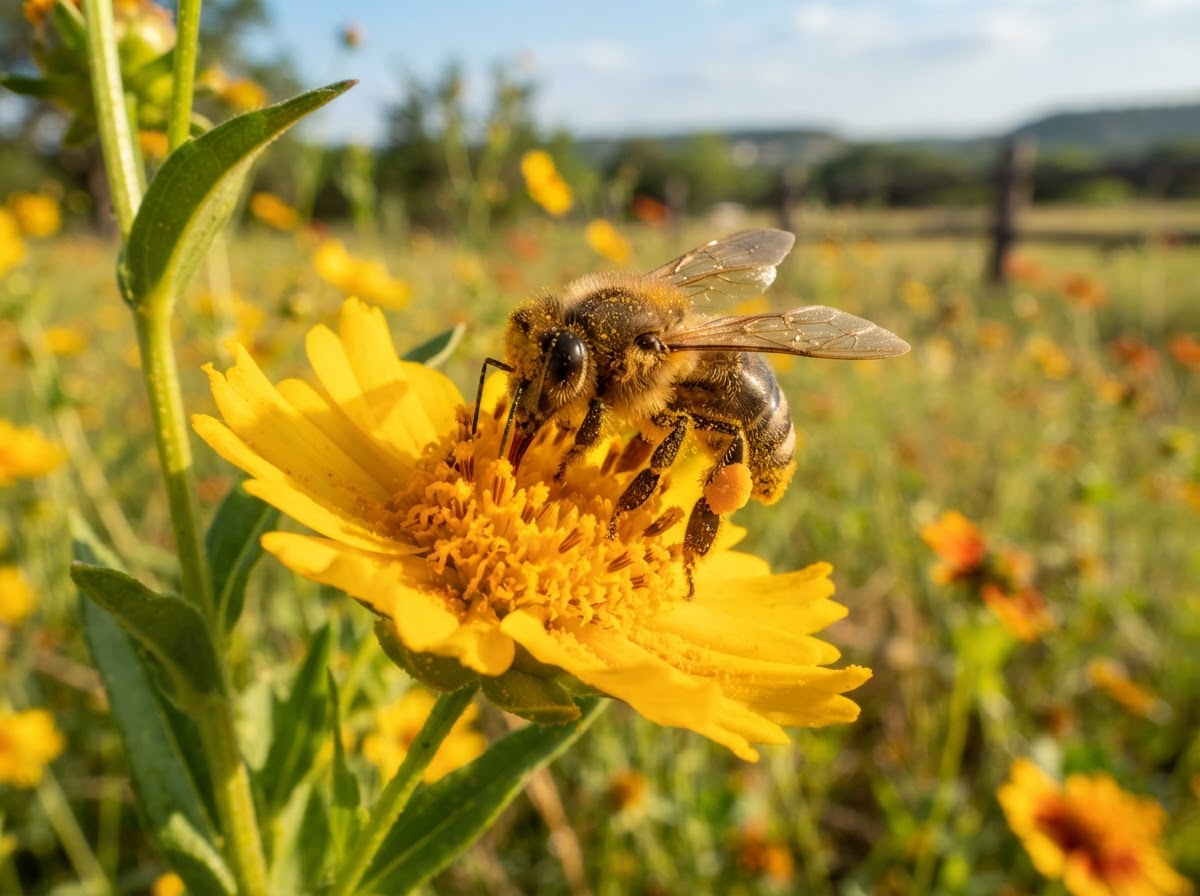
That yellow dust all over this bee? It's pollen — and it's the reason your honey is the color it is. Every flower leaves its own fingerprint.
Four flowers, four honeys
These are a few of the blooms our Hill Country bees work through the year — and the very different honeys they make. Which one sounds like your jar?
Clover honey
Pale golden · Clover
Light, mild, and sweet — the honey most Texans grew up on. Clover blooms in pastures and lawns all summer long.
Wildflower honey
Medium gold · Mixed wildflowers
A blend of whatever's blooming — bluebonnets, Indian blanket, primrose. Every batch tastes a little different, like a snapshot of the season.
Mesquite honey
Deep amber · Mesquite
Dark, rich, and almost butterscotchy. Mesquite trees bloom in the Hill Country heat and make a honey that's bold enough to stand up to barbecue.
Buckwheat honey
Dark mahogany · Buckwheat
The darkest honey of all — strong, molasses-like, and packed with antioxidants. An acquired taste that beekeepers love.
A few things to share at the table
Next time someone reaches for the honey bear, you'll have a few good stories to tell.
It's their winter pantry
A colony needs 60–80 pounds of honey just to survive a Texas winter. Every capped frame is a meal the bees worked all summer to put away.
Pollen paints the honey
The color, smell, and taste of honey all come from the flowers the bees visited. Pale clover honey and dark mesquite honey start from the exact same process — only the bloom is different.
One bee, one twelfth
A single worker bee makes only about one twelfth of a teaspoon of honey in her whole life. That jar on your shelf is a whole hive's lifetime of work.
Bees eat it first
Responsible beekeepers only take the surplus — the honey the colony won't need for winter. In a Texas drought there's no surplus, so we feed the bees ourselves and take nothing. The bees always eat before we do.
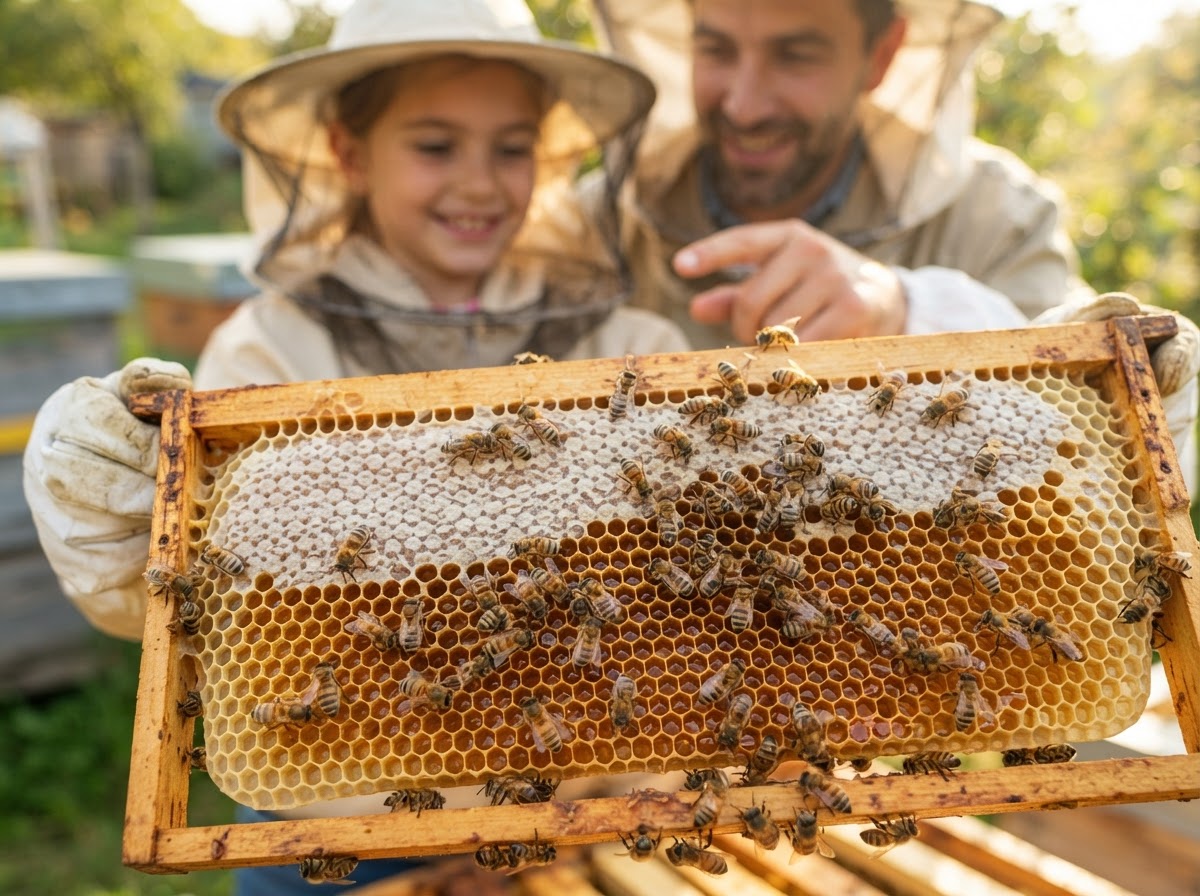
Capped honeycomb — the bees' finished pantry. Each white cap is a sealed jar of honey, made by the bees, for the bees.
We only take what they can spare
At Happy Bee Solutions, our rule is simple: the bees eat first. A colony needs a full pantry to survive winter, and we never take the honey they need to live. In a good year we only harvest the surplus — the extra the hive built beyond what it takes to thrive.
But in a Texas drought, there's often no surplus at all. The flowers stop blooming, the bees can't make enough honey, and we have to feed them sugar syrup ourselves just to keep the colonies alive through winter. When that happens, we take nothing — we can't pull honey from a hive we have to turn around and feed. That's what bees first really means.
Curious about the bees behind the honey?
Come meet a real hive, see capped honeycomb up close, and taste the difference Texas wildflowers make. We love teaching folks where their food really comes from.