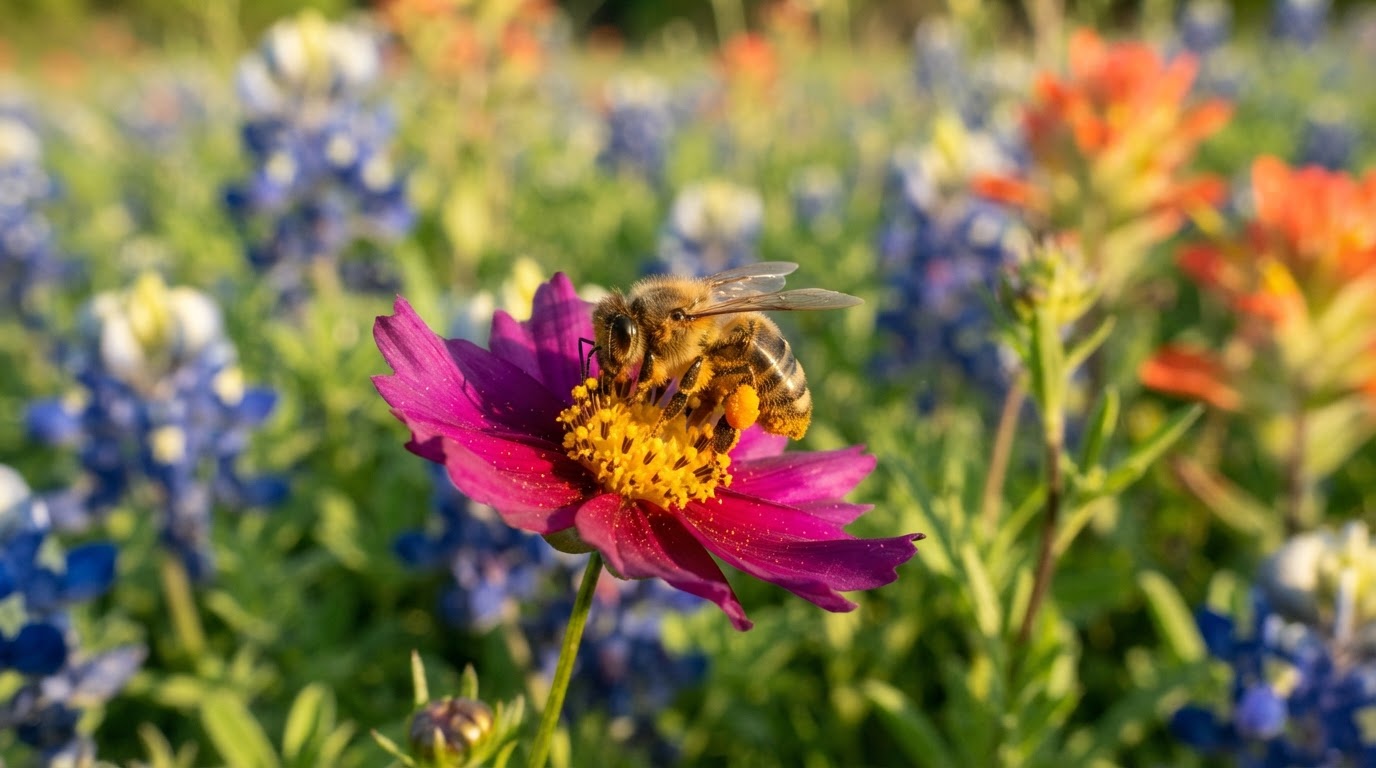
Pollinators need you, and you need pollinators. From honey bees and bumblebees to native solitary bees, butterflies, moths, hummingbirds, and bats, pollinators are essential to Texas food supply, agricultural economies, and natural Hill Country landscapes.
The Essential Role of Pollinators
Pollinators help produce one out of every three bites of food we eat. By transferring pollen from the male anther of a flower to the female stigma, they enable plants to fertilize, set seed, and produce fruits, vegetables, and nuts.
- Up to 95% of flowering plant species depend on animal pollinators to reproduce.
- Pollinators support more than 180,000 plant species and over 1,200 agricultural crops worldwide.
- Pollinators contribute an estimated $217 billion to the global economy, with honey bees alone adding billions in U.S. agricultural productivity annually.
- Beyond food, pollinators sustain healthy native ecosystems that stabilize soils, filter water runoff, protect watersheds, and support wildlife.
Who Are Texas Pollinators?
While European and Hawaiian honey bees (Apis mellifera) are the agricultural workhorses of Texas, our state is home to hundreds of native pollinator species:
- Honey Bees: Managed and feral colonies providing commercial crop pollination, wildflower pollination, and raw honey.
- Native Bees: Over 800 native bee species live in Texas — including bumblebees, carpenter bees, leafcutter bees, sweat bees, and mason bees.
- Butterflies & Moths: Monarch butterflies migrating through the Central Texas corridor, swallowtails, and night-foraging sphinx moths.
- Hummingbirds & Bats: Essential pollinators for native desert, scrubland, and deep-throated wildflowers.
Challenges Facing Pollinator Populations
Pollinator numbers have faced sharp pressure due to widespread habitat conversion, pesticide misuse, parasitic Varroa mites, hive diseases, and extreme Texas weather swings from prolonged droughts to severe freezes. Addressing these challenges requires active, thoughtful land stewardship.
Recommended Pollinator Resources for Texas Landowners
We encourage landowners to review these science-backed guides for supporting pollinators on Texas acreage:
- USDA NRCS: Native Pollinator Plants of South Texas Guide
- Monarch Watch: Recommended Texas Pollinator Plant Lists
- Texas Parks & Wildlife: Native Pollinator Management Guidelines
- Honey Bee Health Coalition: Best Management Practices for Hive Health
Important disclaimer
This article is general information, not legal or tax advice. Agricultural valuation requirements vary by county and are determined solely by your county appraisal district. Happy Bee Solutions provides beekeeping services and documentation only and cannot guarantee an agricultural valuation, tax savings, or any specific outcome. Consult your CAD and a qualified professional before filing.
Think your land could qualify?
Beekeeping is one of the agricultural uses recognized in Texas. We place, maintain, and document managed hives for landowners across Central & South Texas — Kelly or Paul will walk you through whether it's a realistic fit for your acreage.